
How an Established Dental Practice Stays Visible
Visibility is not automatic for established dental practices. Learn the real strategies that keep your practice at the top of local search and patient awareness.
Read more Dental marketing co.
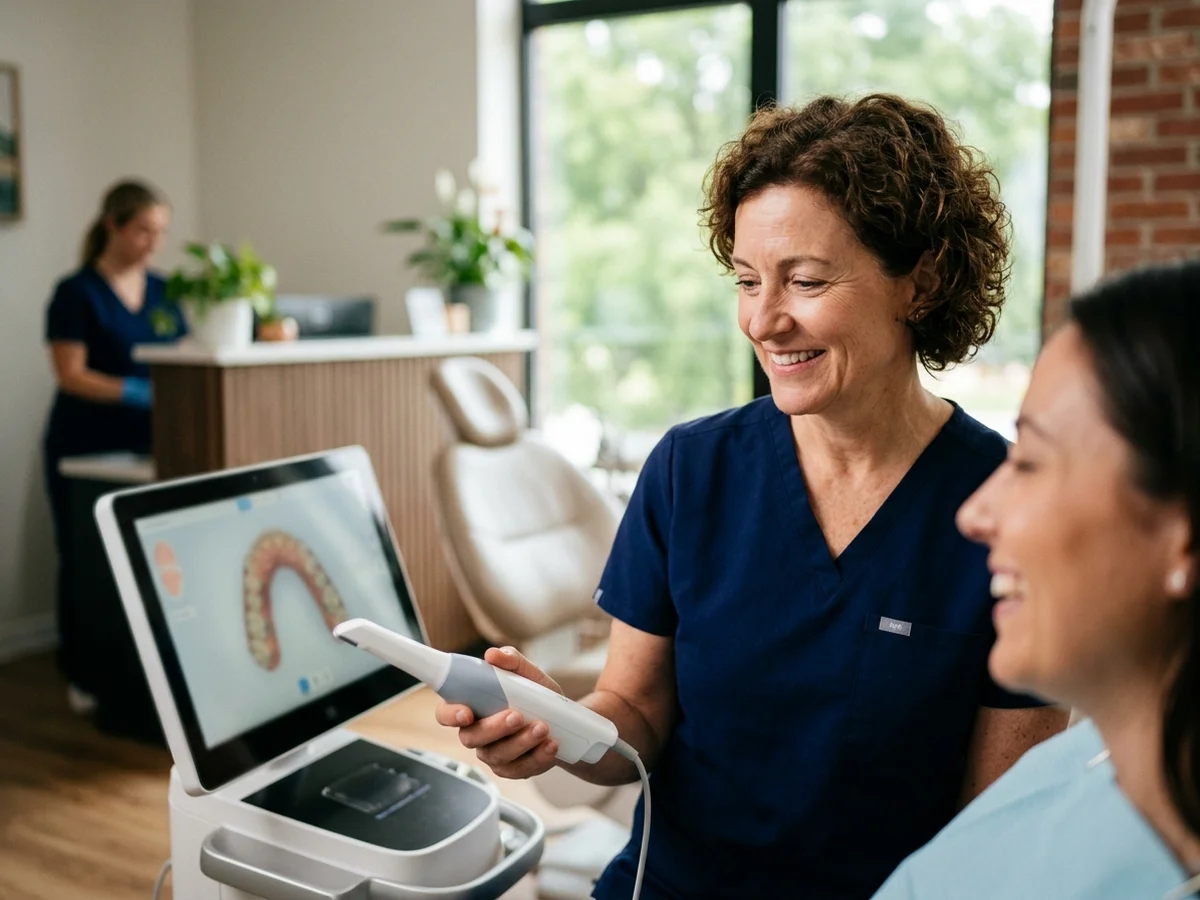
Most dentists who want better Google Maps rankings think about what they need to add to their own profile. That is a reasonable instinct, but it only gives you half the picture. The other half lives inside your competitors' profiles, and it is often full of overlooked gaps that you can move into quickly.
Google Maps is a relative game. You do not need a perfect local presence. You need a stronger one than the practices showing up above you right now. That distinction matters because it makes the work far more focused. Instead of chasing an abstract ideal, you are solving a concrete puzzle with visible pieces. This article walks you through how to read that puzzle and act on what you find.
Open Google Maps and search the way a new patient would. Use terms like "dentist near me," "family dentist in [your city]," or "dental implants [your neighborhood]." Look at the top three results in the local pack. These are the practices you need to understand before you touch anything on your own profile.
For each competitor, note the following:
You are looking for patterns, not just individual data points. If two out of three competitors have fewer than thirty reviews and none have posted a profile update in months, those are real weaknesses you can capitalize on with consistent effort.
Review volume and recency are among the strongest signals Google uses to rank local businesses. A practice with many reviews collected years ago can be overtaken by a practice that actively generates a steady stream of fresh ones today.
If your competitors have stopped growing their review counts, or if their most recent review is several months old, you have an opening. Build a simple, repeatable system for asking patients to leave a review right after their appointment. A text message sent within an hour of checkout, with a direct link to your Google review page, works far better than a generic reminder at the end of a visit.
The content of reviews also matters. Google reads them. Patients who mention specific services, your location, or staff names by name are giving Google richer signals about what your practice does and where it operates. You cannot script reviews, but you can make the process easy enough that more patients follow through.
Many dental practices claim their Google Business Profile and then leave it half finished. A missing business description, no services listed, no photos beyond a stock exterior shot, and zero updates is a surprisingly common profile for a practice that wonders why it does not rank.
Go through every section of your own profile with the same critical eye you used on your competitors. Fill in every available field. Write a business description that names the services you want to rank for and the communities you serve. Add real photos of your team, your treatment rooms, and your front desk area. These are not cosmetic additions. Google uses profile completeness as part of how it evaluates relevance and trust.
Pay specific attention to the services section. Many practices list only a general category like "dentist" and leave the individual service entries blank. If you offer teeth whitening, dental implants, Invisalign, or same day emergency care, each of those deserves its own service entry with a short description. Competitors who skip this step are leaving relevance signals on the table that you can claim.

The Google Posts feature inside your Business Profile allows you to publish short updates that appear directly on your Maps listing. Very few dental practices use this consistently. That makes it one of the lower effort ways to stand out.
A post does not need to be elaborate. A brief update about a new service, a note about expanded hours, or a helpful seasonal reminder about scheduling cleanings before insurance resets all serve the purpose. The goal is to show Google that your profile is actively maintained, and to give patients who find your listing a reason to feel that your practice is current and engaged.
If none of your local competitors are posting, you will stand out immediately. If some of them are posting sporadically, a steady weekly or biweekly cadence will put you ahead of them over time.
Photo count and recency are factors in how Google scores your profile relative to competitors. A listing with many photos added over time signals an active business. A listing where all photos were uploaded once at setup and never touched again signals the opposite.
Add new photos regularly. Rotate in shots of your team, your waiting area, updated equipment, or even a well lit image of your parking and entrance for new patients unfamiliar with the location. Real photos taken on a phone beat no photos at all. You do not need a professional shoot every month.
It varies based on how competitive your local market is and how quickly you act on the gaps you find. Practices in less saturated areas sometimes see movement within a few weeks of making profile improvements and generating new reviews. More competitive markets take longer, but consistent effort compounds over months and the gains tend to hold.
Yes. Google looks at your website as part of evaluating your overall local presence. A site that loads quickly, clearly identifies your location and services, and is technically sound supports your Maps ranking. A neglected website with no location signals or thin service pages can hold your profile back even if the profile itself is well maintained.
Volume matters, but it is not the only factor. Recency matters too. A competitor with many older reviews and a slow trickle of new ones can be overtaken by a practice generating consistent fresh reviews every month. Focus on building a steady pace rather than trying to match their total count all at once.
Responding to reviews, both positive and critical, signals to Google that your profile is actively managed. It also shows prospective patients how your practice handles feedback. A thoughtful, professional response to a critical review often does more to build trust with new patients reading your profile than the critical review itself damages it.
Visibility is not automatic for established dental practices. Learn the real strategies that keep your practice at the top of local search and patient awareness.
Read more
Learn how dentists can turn online reputation into a steady stream of new patients by connecting Google reviews with local search visibility.
Read more
Fifteen minutes is enough for us to show you how many patients are searching in your area and what it would take to reach them.